
Reid, Murdoch & Co. Building
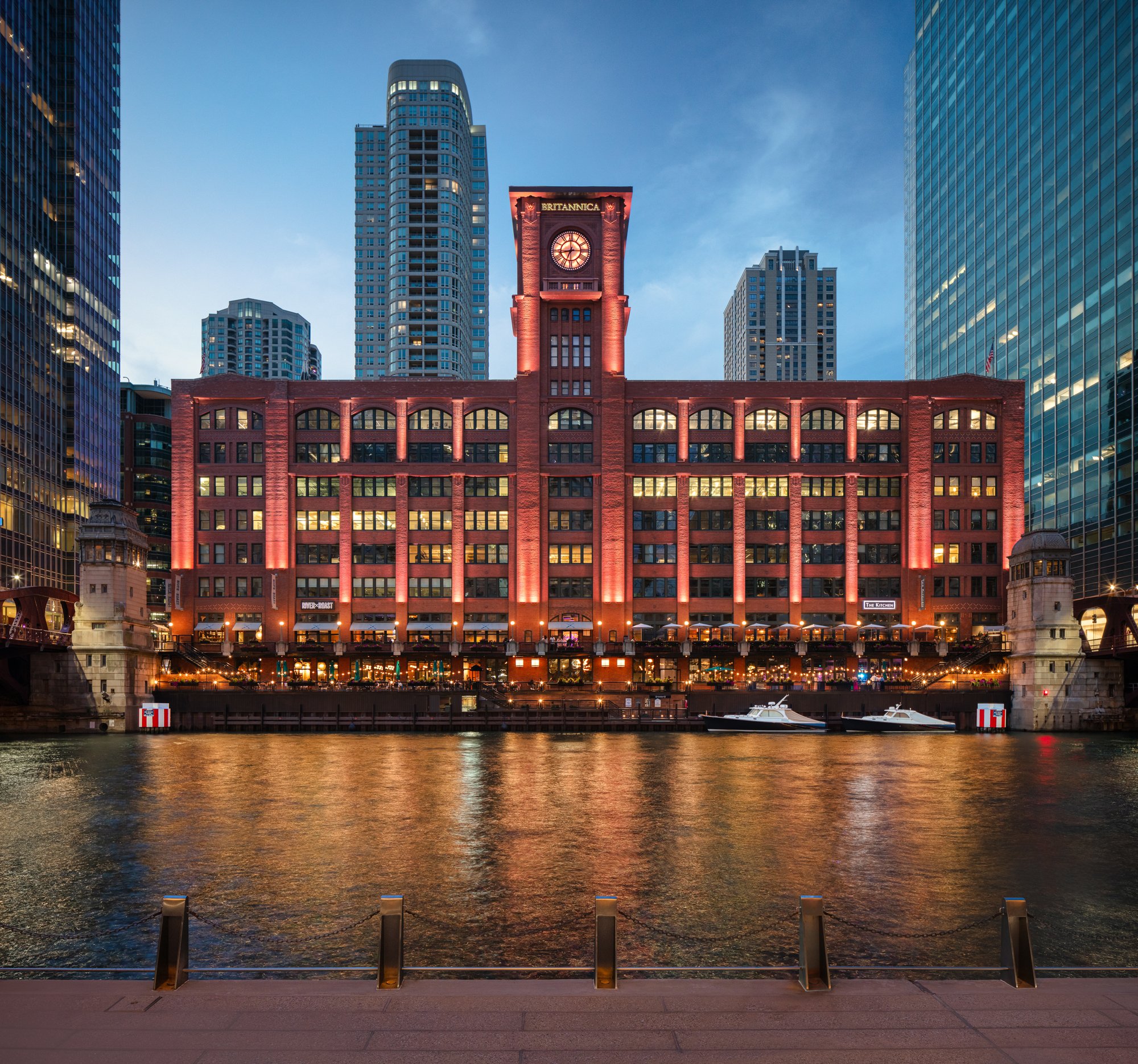
It was another late-night edit. I found myself 3/4ths through post-processing a La Jolla Biotech space. I was grinding to deliver the images early for a client working on a presentation. It's familiar territory. Between Lightroom & Photoshop, I've got a third window open with my white noise companion, YouTube. Between the usual suspect channels, B1M, Kurzgesagt, or a Let's Play going for a game I'll never have time to play, I noticed some new videos in my algorithm, mostly about Great Lake shipwrecks. I figured why not develop a new phobia and started exploring. What does this have to do with photography? Hold on, I'll get there, I promise.
I clicked on a video titled The Full Story of the Eastland Disaster (1915) by Part-Time Explorer. (Link below) It expertly covers a steam-powered ferry based in Chicago. The Eastland capsized through a series of poor modifications, mismanagement, and hubris, carrying over 2,500 people feet away from its dock in the Chicago River. This tragically claimed 844 lives.
What struck me most, was hearing about the masses of Chicagoans who poured into the streets and the river to rescue as many people as they could. It's a testimony of our collective capacity for good in the face of tragedy. A symbol of this effort is the Reid, Murdoch & Co. building, built in 1914 and still standing today.
After the Eastland capsized, people from inside the building were among the first to respond, and the building was turned into a makeshift hospital to treat the wounded.
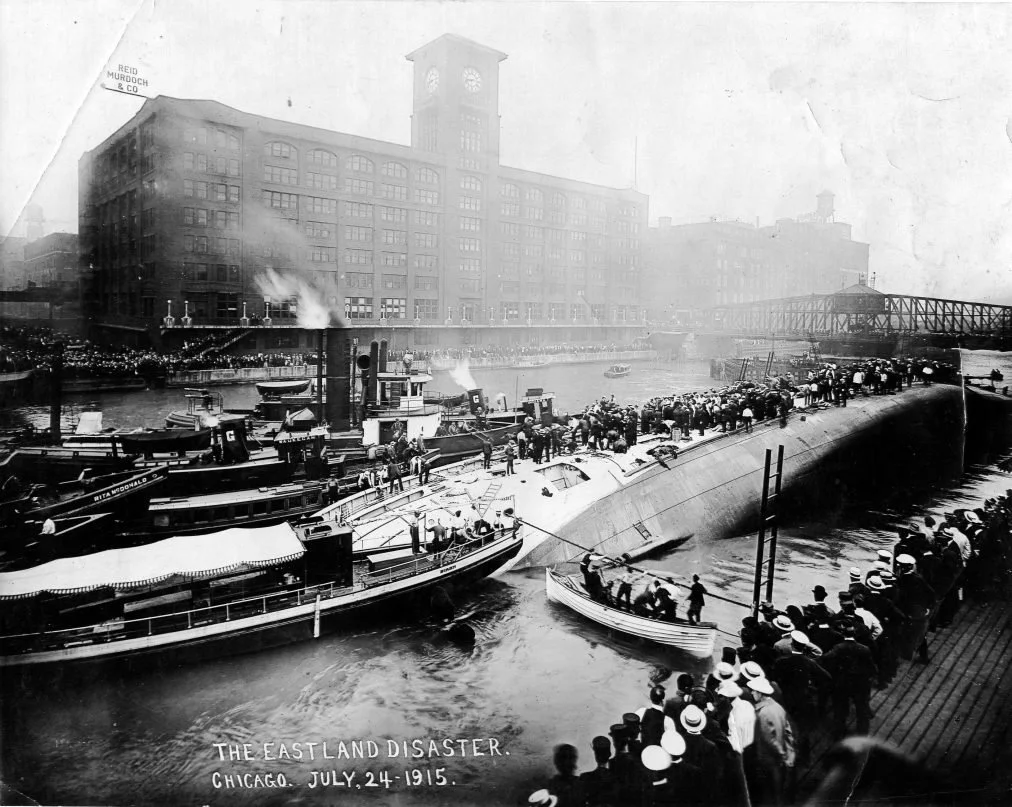
Photo Credit: Eastland Disaster Historical Society
While distinctive, the building probably isn't the first structure that comes to mind when photographing Chicago; however, knowing the history of what transpired there stuck with me.
Fast-forward several months. My wife and I are invited to visit family in Wisconsin and Minnesota. We scheduled a few days in Chicago since we have never been. The first thing that pops into my head is visiting the Reid Murdoch Building and all the other architectural wonders in the windy city. I was getting jazzed up at the thought of checking out projects from Mies van der Rohe, Jeanne Gang, Bertrand Goldberg, and Frank Gehry.
After taking the train to Chicago from Milwaukee, I originally planned to be at the Reid Murdoch Building for golden hour. With an unplanned Tribune Tower sidetrack, I was well into golden hour and jogging toward the Reid Murdoch Building with my camera gear. Although the sun was setting, the Riverwalk was still hot and humid. I was pouring sweat and working against fading light. I had dinner plans with my wife, and I had to return to the hotel for a shower, or I'd be justifiably left outside the dinner venue.
Reaching the area of the Riverwalk directly across from the Reid Murdoch building, I take a moment before setting up to catch my breath and look around. I thought about the old photos showing the Eastland on its side, right in front of where I stood. Given the festive atmosphere with people walking their dogs, kids playing, and boats cruising past with colorful lights and blasting music, it is hard to imagine what unfolded right there. How many passers-by know the history? Heck, until recently, I didn't know the history. It's been a hundred years, and the city has changed so much. There's a plaque nearby, and the Eastland Disaster Historical Society keeps the memory alive.
After a moment, I started setting up my camera. My original plan was to capture the river with the boardwalk in the foreground and the Reid Murdoch building on the far side.
I am a big fan of capturing movement in a scene. Showing people moving about a space gives the viewer a sense of place and scale. That was my initial goal; however, I decided to do the exact opposite after thinking about where I was. I didn't want to show anyone and freeze the scene. This was all about the building staring at me from across the river. The same building filled with ordinary people who did the extraordinary by saving hundreds in the face of unimaginable loss. This building is one of the heroes of that story.
The exterior lights on the building were coming up and getting brighter as early blue hour progressed. I knew I had to work quickly before they and the interior lights would become too hot. I was stuck on the focal length. I still wanted to show the foreground walkway where the Eastland was and keep the building as the focus. My 17mm tilt-shift lens was too broad. It showed too much of the side bridges, minimizing the building. The 24mm tilt shift would barely work if I pushed the shift far and cut a lot of headroom out of the frame. I envisioned this going very differently in my head. Adding to the challenge is the building is asymmetrical after it lost a small portion of itself in 1930 during the widening of LaSalle St. (a fun fact you learn on the architectural boat tour). The Riverwalk and the building are also not parallel. That I learned while fine-tuning the alignment on my tripod head. Time was ticking, and I had to shift as someone pushing an oversized stroller needed to move past my setup. It was then a possible solution rolled through my noggin.
I love Elia Locardi's landscape work and have watched many of his videos. There was a great technique he used to capture a panorama using a tilt-shift lens, photographing the scene horizontally in two parts. I've done it a few times in the past. Stitching bracketed architecture shots in post is tricky but doable. Getting the gear settled back down, I worked on dialing in the building. I wanted to capture enough headroom around the building to show how much the surrounding city has changed. This was the easy part. After running brackets for about 15 minutes, I focused on capturing the river and foreground by shifting the lens down to create a vertical panorama. The river was a mess of boat traffic. This was made worse when a pontoon boat of drunken revelers lost power and proceeded to collide with a pedestrian dock and bounce back into the middle of the river. Boat traffic in both directions had to maneuver around the hazard as onlookers gathered on the side of the Riverwalk. Fortunately, everyone was ok. I proceeded to focus on capturing the negative space. I thought about how much I would hate my future self with the post-production composite. It was a bear for sure, but it was worth it.
What's the lesson here? Am I going to do lessons for all my blog posts? Do I provide any helpful information? No idea. There are plenty of photographers who would do things way differently. You do you and rock your style. My only goal is to provide insight into my thought process, and if that helps a photographer in a pinch, then that's fantastic. With this building location and photo, it really helped when I stopped cold with the clock ticking and re-evaluated my game plan. There was a solution I didn't anticipate going in that saved the shot.
If there is anything else you can glean from this, check out some history. Maybe the video on Part-Time Explorer on the Eastland. My video algorithm is currently filled with nautical disasters, and now I'm terrified of the Great Lakes. Thanks, YouTube!
Sources:
Eastland Disaster Historical Society
Part-Time Explorer - The Full Story of the Eastland Disaster (1915)